ATLANTA- In a city as fast growing as Atlanta, access to fresh food is far from equal. While some communities experience abundance, others face limited access to nutritious options, highlighting a persistent gap in the local food system. A local nonprofit called Concrete Jungle is working to close that gap by redirecting surplus produce to people who need it most.
The organization began with a simple realization: large amounts of fresh food were going to waste across the city while many residents lacked access to it. That discovery evolved into a structured system of rescuing and redistributing food throughout Atlanta.
At the center of those operations is Concrete Jungle’s inventory and logistics manager, Madeline Baer, who ensures food is efficiently moved from where it’s sourced to where it’s needed.
“I handle communication with partners receiving our produce—whether it’s purchased from a farm or donated—and manage where it’s stored in the warehouse while keeping track of inventory,” Baer said. “I also create new partnerships with those who might be able to donate produce.”
Her day-to-day work reflects the scale and complexity of that system.
“A typical day includes communicating with partners to schedule pickups and deliveries, checking produce quality coming in or leaving the warehouse, packing orders in cold storage, and occasionally picking up or delivering donations in our 26-foot refrigerated truck or cargo van,” Baer said.
That coordination ensures food moves quickly, which is an essential factor when working with perishable goods.
“We track everything—pounds harvested at our farm in Sylvan Hills, and all produce moved in and out of our warehouse,” Baer said.
Still, unpredictability is a constant factor.
“One of the biggest challenges is last-minute donation calls. We have to think on our feet about who can pick it up, when, and where it can go to maximize impact and maintain quality,” she said.
Food in motion
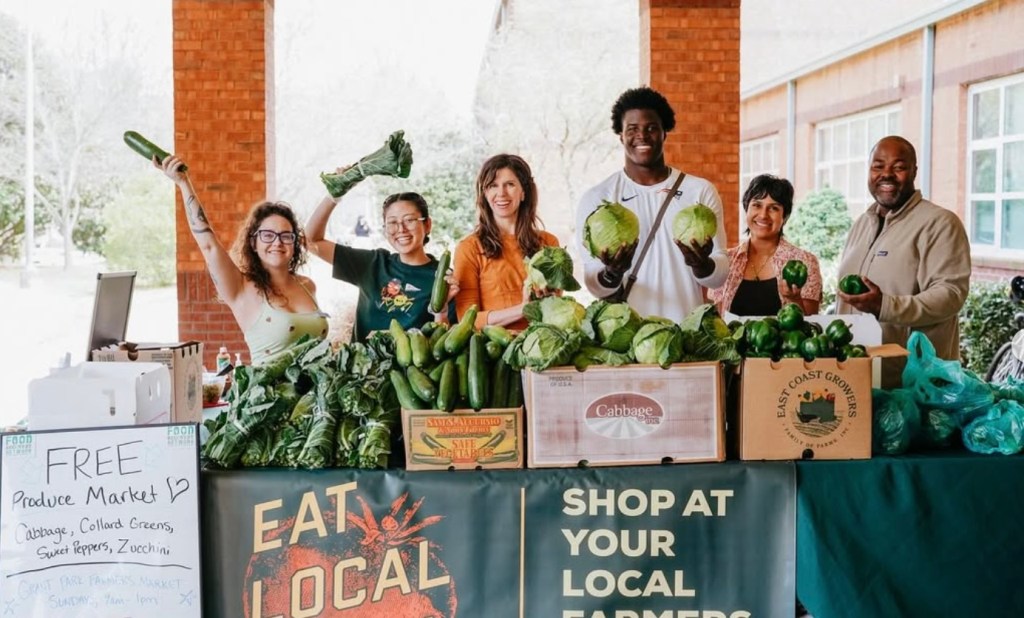
Concrete Jungle’s work begins with sourcing food that might otherwise go to waste. Volunteers harvest fruit from residential properties and public land, while partnerships with local farms and distributors bring in additional surplus produce.
From there, Baer helps direct where that food goes next.
“Most of it goes directly to organizations, ministries, and nonprofits that feed food-insecure individuals in different communities,” she said.
These partners include food banks, pantries, soup kitchens, schools, churches, and civic organizations across the community.
A growing need
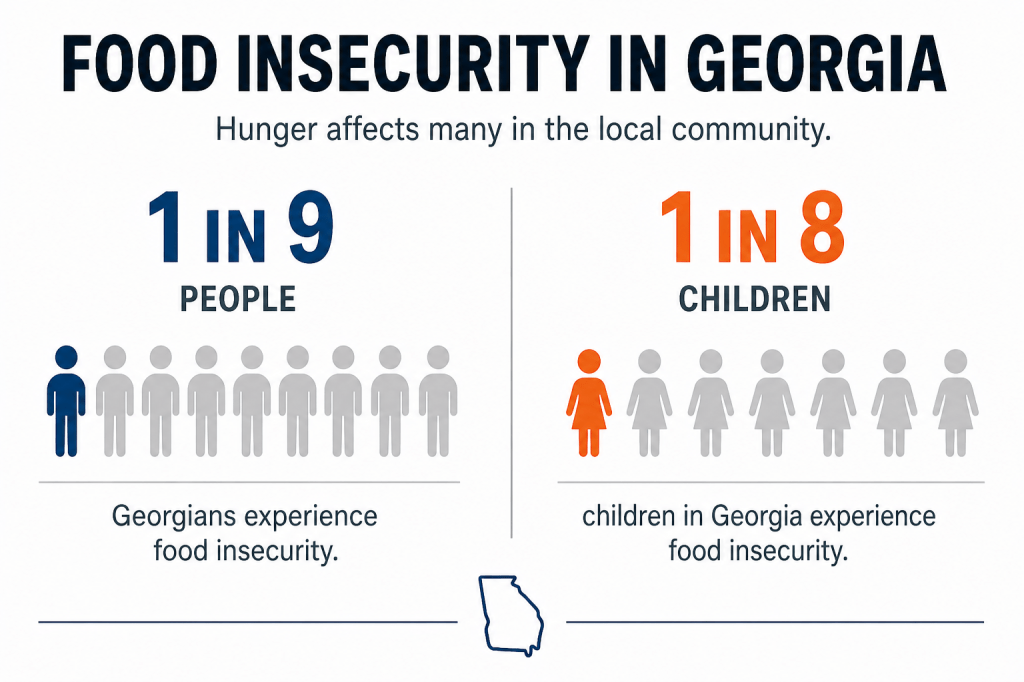
Food insecurity remains a major issue in Atlanta. According to the Atlanta Community Food Bank, one in nine people in metro Atlanta experience food insecurity, with even higher rates in underserved communities. Access to fresh produce is especially limited in neighborhoods considered “food deserts.”
At the same time, rising grocery prices are making it harder for individuals and families to afford nutritious food.
“The rising grocery prices affect the portions of meals that I cook for myself, because I try to make my groceries last as long as I can,” Atlanta resident Callie Smith said. “You don’t get a lot of bang for your buck nowadays.”
“Despite the overcharging for basic groceries, it’s clear that the quality of food has decreased substantially over the past few years,” she added. “It sucks that we are having to pay more for food that is becoming less and less nutritional.”
Connecting supply and need
Concrete Jungle’s approach is built on linking two realities that exist side-by-side: surplus food and food insecurity.
“We connect imperfect, excess, or unsold produce—of which there is an abundance—with food-insecure people,” Baer said. “It helps farmers, reduces food waste, and provides nutrient-dense food to communities during Georgia’s growing season.”
Still, broader systemic problems are present.
“Food insecurity is a problem I’m seeing progress on, but it still needs work,” she said. “As a nonprofit tackling systemic issues, we face similar challenges as the community, like rising food prices and cuts to assistance programs.”
Those rising costs directly impact operations.
“Rising food costs impact our ability to purchase produce from farmers, which limits the variety and quantity we can redistribute,” Baer said.
Measuring impact
Concrete Jungle measures its impact through more than just the pounds of food they distribute. The organization tracks volunteer engagement, the number of people served, partnerships, participation in educational programs, along with outreach to seniors, children, and residents in food desert areas.
For Baer, the impact is visible daily.
“Seeing the amount of food we move in a week that would otherwise be wasted—and knowing it’s going straight to someone who needs it,” she said, describing the most meaningful parts of her role.
Looking ahead
As demand continues to grow, scaling operations remains a challenge.
“Produce is perishable, and trucks, fuel, and labor are costly. Everything has to be in the right place at the right time,” Baer said. “Our mission involves overcoming those barriers and continuing to grow each year.”
Support from the community is essential.
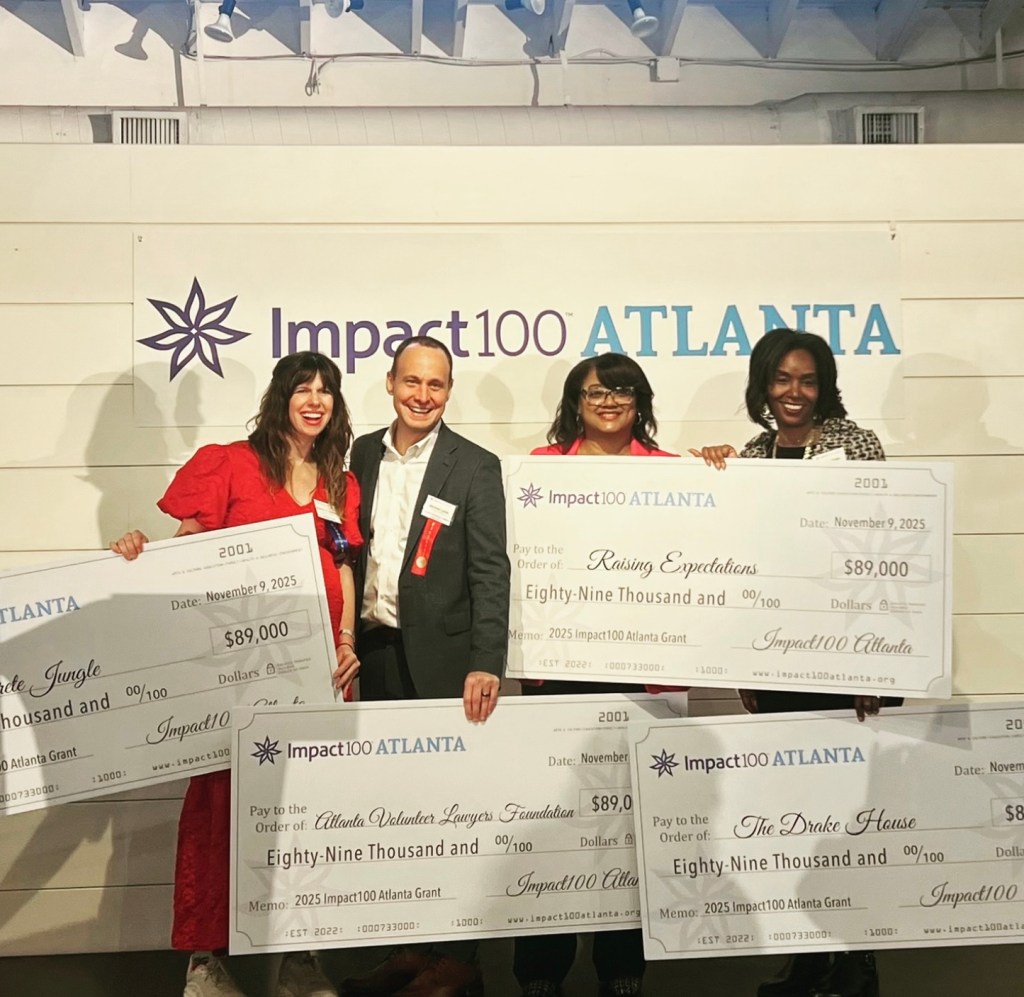
“We rely solely on volunteers, donations, and grants to pay for everything—from salaries to warehouse space and cold storage,” she said. “Our community supports the existence of Concrete Jungle.”
Looking ahead, the organization hopes to expand its impact beyond Atlanta.
“We want to scale our operations and be an example for other nonprofits to help their communities by doing what we do,” Baer said.
What started as a way to redirect excess food has grown into a community-driven effort to address hunger across Atlanta. In a city where abundance and need exist side-by-side, Concrete Jungle continues to bridge that gap, one delivery at a time.
Community members can get involved by signing up for Concrete Jungle’s newsletter, volunteering at harvests and distribution events, or donating.

Leave a Reply