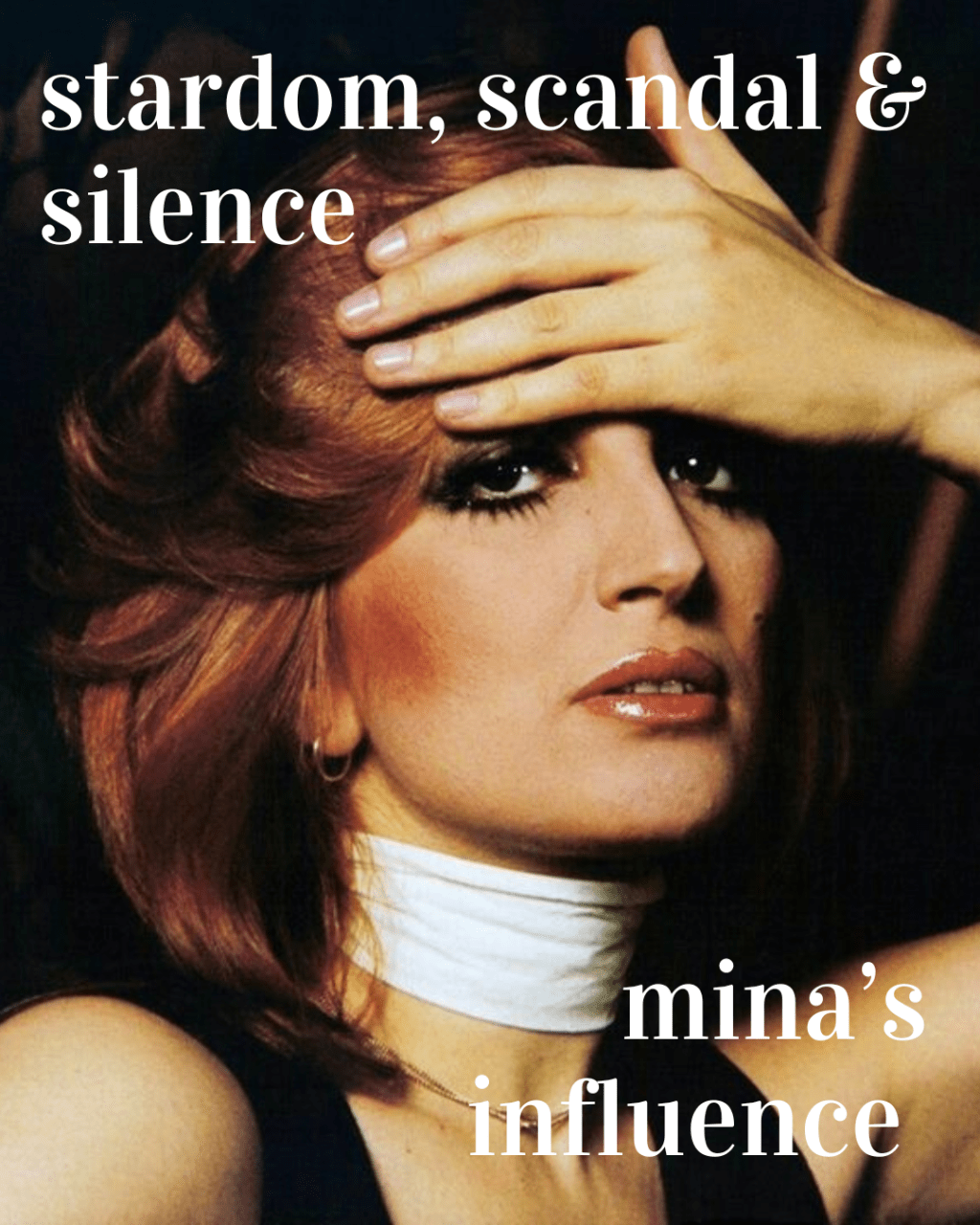
If you know only one name when it comes to Italian pop culture, it should be Mina. She isn’t just a pop star, but rather a cultural icon who paved the way for generations of young women.
She was born Mina Anna Mazzini in 1940 in Busto Arsizio, Italy. Not only did she dominate the Italian music charts, but she quietly (and sometimes not so quietly) reshaped what it meant to be a woman in Italy.
Mina was a feminist long before feminism became a mainstream conversation in the predominantly Catholic country. She was building a career on her own terms and living a fully, unapologetic life in a society that often passed judgement onto her.
When she exploded onto the music scene in 1958, Italy was rooted in Catholicism and deeply traditional. In the 1950s, television was coming into popularity and becoming the heart of national identity, defining what it meant to be a “celebrity.” Suddenly musicians weren’t only heard on the radio, but their image was broadcast into living rooms on a weekly basis. Most women who appeared on the screen were classic, carefully composed beauties with a polished presence. Mina, on the other hand, took to the screen with dramatic eyeliner and an electric stage presence. Her musical style blended jazz and American-influenced rock in a modern and bold way. And the Italian audience absolutely loved it.
However, at the height of her career, scandal struck. Her personal life made headlines in 1963 when she had a child with a married actor. In conservative, Catholic Italy having a child not only out of wedlock, but also out of an affair, was extremely scandalous. RAI, the Italian national broadcaster, even banned her from appearing on television. Mina was essentially “cancelled,” speaking in modern terms. For many women at the time, that severe of a public shaming would have meant the end of their career. But not for Mina.
Mina was so beloved by the people, that even being banned from television did not stop her records from selling. Her popularity was so overwhelming that the ban didn’t last. The public wanted her back. In hindsight, this moment was much bigger than it may seem. The public’s desire to bring Mina back represented a cultural shift happening in Italy. It showed that people were open to allowing talent to outweigh moral judgement, and that a woman’s personal life didn’t have to define her career.
Mina positioned herself in a way that allowed her to be one of Italy’s loudest feminists, by letting her work and life speak for themselves.
In 1978, Mina did something completely unexpected. She stepped away from the public eye at the height of her career. She made the shocking decision to quit performing publicly and largely withdrew from public appearances all together. A woman making such a loud decision for her career was unheard of at the time.
Despite stepping away from performances, Mina still continues to release new music, three decades later. Her move to step away from the spotlight turned her into a mysterious figure, which only added to her aura and appeal as an artist. Mina released her newest studio album in 2024, at the age of 84, proving that talent doesn’t diminish with age.
Today, she remains one of Italy’s most beloved and influential artists. She’s nostalgic for older generations, younger generations regularly recognize and rediscover her music, and her aesthetic and style still somehow feel surprisingly current. But her real legacy goes deeper than record sales. Mina helped normalize the idea that a woman could be multidimensional. She could be emotional yet strong, maternal yet ambitious, and most importantly- private yet powerful.
Society loves labels, especially when it comes to putting women into categories, but Mina proved that labels don’t have to stick. Sometimes the loudest rebellion you can show is just being yourself. Bold. Fearless. Unapologetic.

Leave a comment